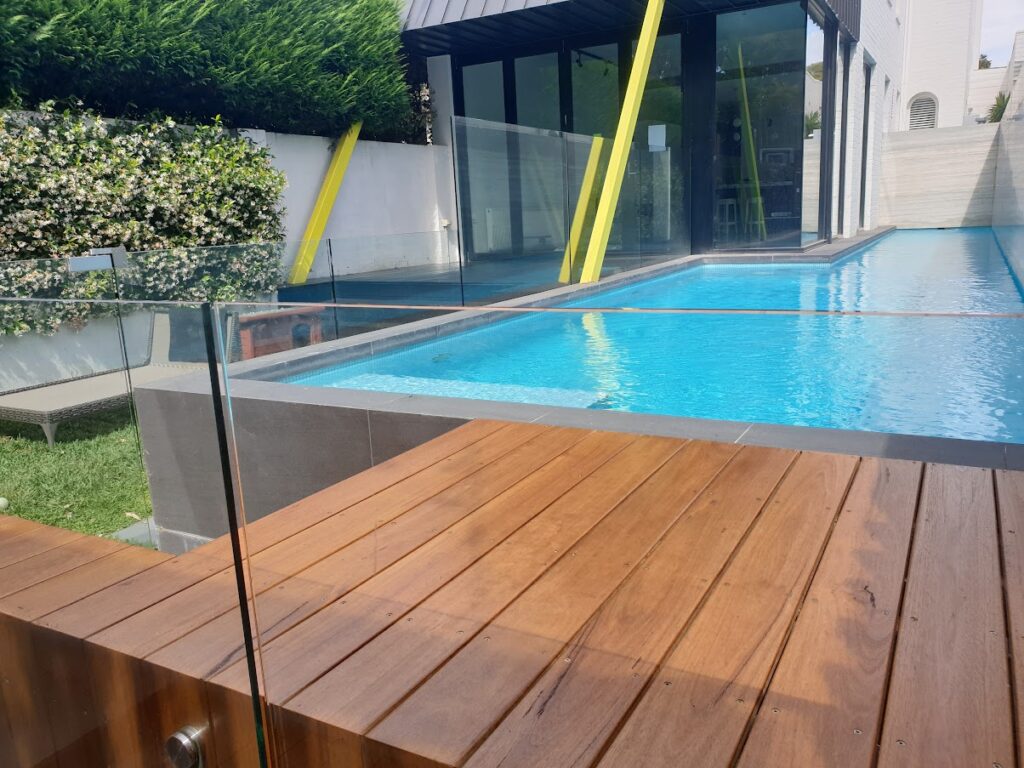
Deck Oiling in Melbourne
Deck oiling is the single most important thing you can do to extend the life of a timber deck. Done properly, it protects against UV breakdown, blocks moisture ingress, prevents splintering and cupping, and keeps the timber colour rich and warm. Done badly — or skipped entirely — your deck ages five times faster than it needs to.
The Deck Guy provides specialist deck oiling across Melbourne — from coastal Bayside decks battling salt air and harsh UV, through the leafy Eastern Suburbs where shade brings mould and algae issues, out to the Mornington Peninsula and Geelong. We’ve oiled hundreds of decks since 2018, and we know which oil suits which timber, which exposure, and which condition.
We don’t just slap on a coat and leave. We assess the deck, prep it properly, and apply the right oil the right way. That’s why our finishes last.
Why deck oiling matters more than people think
Timber decks face a brutal combination of stresses, especially in Melbourne’s climate:
UV radiation breaks down the lignin in timber — the natural binder that holds wood fibres together. Without oil protection, UV bleaches the surface grey within 12-18 months and degrades the structural integrity over years.
Moisture cycling is worse than constant wet. Timber that absorbs water then dries out repeatedly cups, warps, splits, and develops surface checking. Oil-treated timber sheds water; untreated timber drinks it.
Foot traffic, furniture, and pets all abrade the surface. Without a maintained oil layer, fibres lift, splinter, and wear unevenly.
Mould, algae, and lichen colonise damp, untreated timber — especially in shaded Eastern Suburbs decks. Oiled timber resists colonisation.
An unoiled deck will look weathered in two years and need full restoration in five. A properly oiled deck — recoated every 12-24 months depending on exposure — can last 20+ years with no major intervention. Oiling isn’t a cosmetic upgrade. It’s the difference between a deck that lasts a decade and a deck that lasts three.
Our deck oiling process
Most “deck oiling” jobs in Melbourne are done in a couple of hours by someone who didn’t prep properly. The oil sits on top of grime, fails to penetrate, and peels within months. We do it properly.
Step 1 — Assessment. Before we quote, we look at your deck. Timber species, condition, exposure, existing finish (or lack thereof), and any structural issues. The right oil for Merbau is different to the right oil for Spotted Gum. Coastal exposure changes the recommendation again.
Step 2 — Cleaning. Every deck gets cleaned before oiling — there’s no shortcut. We use timber-safe cleaning agents and the correct pressure setting to remove dirt, surface grime, mould, algae, and any failed previous coating. Pressure too high blows out the grain; too low leaves contamination.
Step 3 — Drying. Timber needs to be properly dry before oil application. We give it adequate drying time — usually 24-48 hours depending on weather — because oil over damp timber traps moisture and fails fast.
Step 4 — Light sanding (if required). Decks with raised grain, splintering, or rough patches get a light sand to give the oil a clean surface to bond to. Not every deck needs sanding for oiling — but when it does, we don’t skip it.
Step 5 — Oil application. Two coats minimum, applied properly, with appropriate flash-off time between coats. We work along the grain, wipe back excess where needed, and ensure even coverage on board ends, edges, and any vertical surfaces.
Step 6 — Cure time. We give the deck the time it needs to cure before furniture goes back on. Walking on a half-cured deck ruins the finish.
The whole process typically takes 2-3 days from start to handover, depending on deck size and weather.
Which oil for which timber
This is where most oilers go wrong. There’s no single “best deck oil” — there’s a right oil for each timber and situation.
Merbau — the most common deck timber in Melbourne. Naturally oily and tannin-rich. Needs an oil that penetrates well without sitting on top. We typically use a Merbau-specific or high-grade hardwood oil for these decks.
Spotted Gum — dense Australian hardwood, very common in newer Melbourne builds. Takes oil beautifully but needs a slightly higher application volume. Excellent UV resistance once protected.
Blackbutt — lighter native hardwood. Common in bushfire zones and modern builds. Oils well, holds colour evenly.
Jarrah — premium WA hardwood. Deep red colour responds dramatically to oiling. We use oils that enhance rather than mask the natural pigment.
Treated pine — common in raised decks and budget builds. Needs more frequent oiling than hardwoods — typically every 12 months. Picks up colour from tinted oils well.
Composite decking — not oiled. If you have composite, you don’t need this service — you need a refresh clean instead. We can do that too.
Not sure what timber you have? Send a photo with your enquiry and we’ll usually identify it.
Common deck oiling mistakes (and what they cost you)
Eight out of ten failed oil jobs we see have the same root causes. If you’re considering DIY, or hiring someone cheap, these are the traps:
Oiling over a dirty deck. Oil needs clean timber to penetrate. Applied over dust, pollen, mould, or old failed coatings, it sits on top and peels within 2-6 months. Looks fine for a fortnight, then catastrophic failure. Prep is 70% of the job.
Wrong oil for the timber. A film-forming product on Merbau will peel. A penetrating oil on heavily weathered Treated Pine won’t go far enough. Matching oil chemistry to timber species matters.
Applied too thick. More oil isn’t better. Excess oil that doesn’t soak in pools on the surface, gets sticky, and never properly cures. Then it attracts dust, traps moisture underneath, and looks streaky.
Applied in wrong conditions. Hot midday sun causes the oil to flash off before it penetrates. Cold damp mornings prevent proper drying. The window is narrower than people realise — usually mild, dry, slightly overcast conditions.
Skipping the second coat. One coat is rarely enough on hardwood. Two coats minimum. Three on heavily exposed or thirsty timber.
No prep between coats. Light buff or wipe-back between coats removes raised grain and ensures the second coat bonds properly.
Walking on a half-cured deck. Foot traffic before cure leaves marks, picks up the finish, and ruins the job. Wait the time the product needs.
A failed oil job costs more to fix than to do right the first time — because the failed coating has to be fully stripped or sanded before re-oiling is possible.
Oil vs stain vs paint — which is right for your deck?
These three finishes look similar to homeowners and are completely different products.
Deck oil is a penetrating finish. It soaks into the timber, protects from within, and weathers gracefully — fading evenly rather than flaking. Best for hardwoods. Easy to maintain (re-oil over the top, no stripping). Preserves the natural look of the timber. This is what most Melbourne timber decks should have.
Deck stain is partially penetrating, partially film-forming. It carries pigment that changes the timber colour while still letting some of the grain show through. Useful when you want to refresh the colour of faded timber or unify multiple timber species. Longer-lasting than oil in some scenarios but harder to maintain — eventually needs stripping rather than just over-coating.
Deck paint is fully film-forming and opaque. It covers the timber entirely with a pigmented coating. Maximum protection from UV, but hides the grain completely. Suitable for treated pine decks, severely weathered timber that can’t be restored to a natural look, or specific aesthetic choices. Requires more prep, more upkeep, and eventual stripping when it fails.
The right choice depends on your timber, your aesthetic preference, and how much maintenance you want to commit to. We talk this through during the quote and recommend honestly based on your deck, not on which job pays us more.
For paint and stain specifically, see our deck staining and deck painting service pages.
How often does a deck need oiling?
Honest, realistic intervals — not the “every 6 months” line some oilers push to keep selling jobs:
- Coastal decks (Bayside, Mornington Peninsula) — every 12-18 months. Salt air and intense UV shorten oil life.
- West-facing or fully exposed inland decks — every 18-24 months. Direct sun is the main factor.
- Sheltered or south-facing decks (Hawthorn, Camberwell, leafy Eastern Suburbs) — every 24-30 months. Less UV exposure, but watch for mould build-up.
- Pool decks — every 12-18 months. Constant moisture cycling plus chlorine exposure stresses the finish.
- High-traffic decks (entertaining areas, families with kids and pets) — pull these forward by 6 months. Wear is faster.
A deck that’s been left too long doesn’t need more oil — it needs restoration first, then re-oiling. We’ll tell you honestly which one yours needs.
When is the best time to oil a deck in Melbourne?
Timing matters more than people realise. Oil cures best in mild, dry, low-humidity conditions.
Best months: March-May (autumn) and September-November (spring). Mild temperatures, lower humidity, reliable dry stretches. Decks cure properly, finishes hold.
Workable months: December-February (summer) — but avoid 30°C+ days. Oil applied in extreme heat flashes off before penetrating.
Challenging months: June-August (winter). Damp, cold, and short drying windows make winter oiling slow and risky. We’ll do it during dry stretches but prefer to defer to spring.
Avoid: Oiling immediately before rain. Oiling on dewy mornings. Oiling on a deck that hasn’t dried after washing.
Most of our oiling work is booked in spring and autumn — your deck looks its best heading into summer or sitting through winter protected.
How much does deck oiling cost in Melbourne?
Honest pricing context — exact numbers depend on your deck and the work involved:
- Standard clean-and-oil on a well-maintained deck sits at the lower end of our pricing. Smaller decks (under 20m²) finish faster and cost less.
- Decks needing sanding or repairs first cost more because more labour is involved. The oil itself is a small portion of total cost.
- Larger decks (40m²+) are usually quoted per square metre, and per-m² rate drops as size increases.
- Difficult access, multi-level decks, or pool surrounds can add to time and therefore cost.
Every quote is itemised — you see exactly what you’re paying for and why. No hidden surprises, no “while we were there” charges at the end.
Free written quotes on every job. We come to your home, assess the deck properly, and give you a price you can rely on.
Quick deck assessment checklist
Want to know if your deck is due for oiling? Run through this:
- Water test — sprinkle water on the deck. If it beads up, the oil layer is still working. If it soaks straight in, the deck is thirsty and needs oiling.
- Colour test — has the timber faded to grey, or does it still show warm colour tones? Grey means UV has stripped the protection.
- Touch test — run your hand along the boards. Smooth and clean = fine. Rough, splintery, or fibrous = needs attention.
- Mould check — any dark patches, especially in shaded areas? That’s mould or algae colonising unprotected timber.
- End grain check — look at the board ends. Cracking, splitting, or dark water-staining? End grain is the first place rot starts.
- Last oiled? — if you can’t remember, it’s been too long.
Any two or more of these signals = book a quote.
Where we oil decks
We provide deck oiling across:
- Bayside — Brighton, Hampton, Sandringham, Cheltenham, Mentone, Beaumaris, Mordialloc. See our Brighton deck services page for coastal-specific information.
- Eastern Suburbs — Hawthorn, Camberwell, Kew, Toorak, South Yarra, Prahran, Glen Iris, Malvern
- South-East — Keysborough, Glen Waverley, Moorabbin, Parkdale, Frankston
- Mornington Peninsula — across the peninsula
- Geelong region — Geelong and surrounds
If your suburb isn’t listed but is within greater Melbourne or Geelong, ask anyway. Often happy to travel for the right job.
Frequently asked questions
How much does deck oiling cost in Melbourne?
Pricing depends on deck size, condition, timber species, and whether prep work is needed. A straightforward clean-and-oil on a well-maintained 20m² deck sits at the lower end; a heavily weathered deck needing sanding and full prep before oiling costs more. We provide free written quotes on every job.
Can I oil my deck myself?
You can. Many people do. The two most common DIY mistakes are insufficient prep (oiling over a dirty deck — fails within months) and using the wrong oil for the timber (looks fine for six weeks, then peels). If you want to DIY, get the prep right and match the oil to the species. If you want it done once and done properly, that’s what we’re for.
How long until I can walk on the deck after oiling?
Light foot traffic typically OK after 24 hours. Furniture and full use — 48-72 hours depending on weather and oil type. We’ll give you specific guidance on handover.
Can you oil a deck in winter?
Yes, but with caveats. Cold, damp conditions extend drying and curing time substantially. We prefer to schedule oiling in spring, summer, and autumn. Winter oiling is possible during dry stretches but slower.
Do you use water-based or oil-based products?
Both, depending on the job. Oil-based penetrating oils generally give deeper protection and longer life on hardwoods. Water-based products dry faster and have lower VOCs. We recommend based on your timber and circumstances, not on what’s easiest for us.
Will the colour change?
Yes — usually for the better. Fresh oil brings out the natural depth of the timber. Faded grey timber will return to something close to its original tone, sometimes richer. Tinted oils can shift the colour deliberately if that’s what you want.
Do you offer ongoing maintenance contracts?
Yes. Many of our clients book us in on a scheduled cycle so they don’t have to think about it. We turn up when it’s due. Talk to us about ongoing care arrangements.
Will oiling fix a badly weathered deck?
Sometimes yes, sometimes no. Lightly faded decks usually respond beautifully to a clean-and-oil. Heavily weathered decks — silver-grey, splintering, raised grain — need restoration first (sanding, repairs) before oiling will hold properly. We’ll tell you which one yours needs at the quote.
Are you insured?
Yes. Public Liability cover of $5,000,000 across all work.
Book your deck oiling quote
The Deck Guy provides free on-site quotes across Melbourne. We’ll inspect your deck, identify the timber, assess the condition, recommend the right oil, and provide a written itemised quote — usually within a few days of the visit.
Call 0468 070 080 or use the contact form. We respond fast and we don’t waste your time.
For related services, see our deck restoration page if your deck is past the point where oiling alone will fix it, or our build a deck page if you’re considering a new deck altogether.